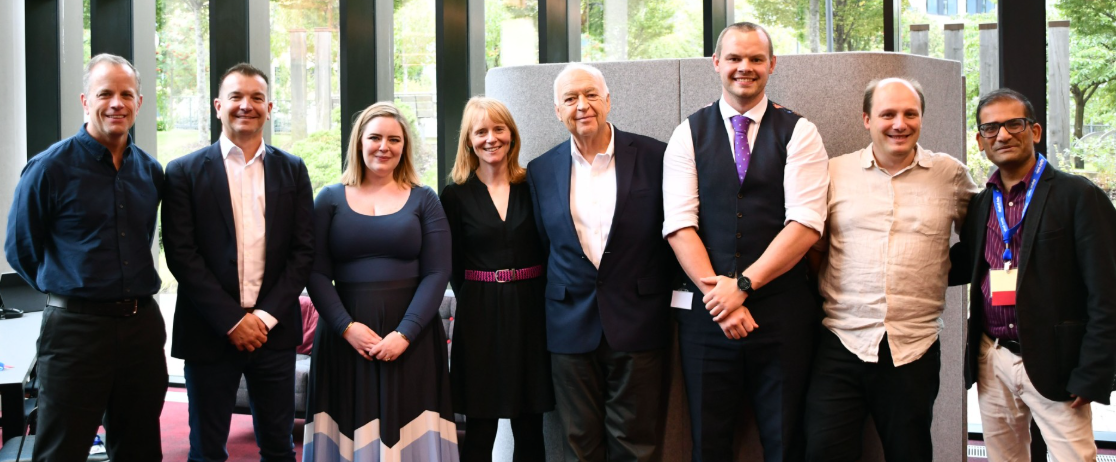
The way chronic kidney disease (CKD) is diagnosed and treated could be transformed through a new partnership between the Health Innovation Network Yorkshire & Humber, Nexus, the innovation community based at the University of Leeds, the West Yorkshire Integrated Care Board, and Kidney Research UK, who have signed a landmark Memorandum of Understanding (MOU) to drive innovation and impact in this area.
The agreement marks the launch of a world-first project to develop a population health “digital twin” – a virtual model that mirrors real-world systems to test interventions – beginning with chronic kidney disease, one of West Yorkshire’s most urgent health challenges.
This ambitious project emerged from conversations between the Health Innovation Network Yorkshire & Humber and Nexus. Recognising the growing impact of CDK, they brought together clinical expertise, charity, research, and business to collaborate on potential solutions.
The approach is designed to identify CKD earlier, improve patient outcomes through timely interventions, and enable the NHS to target staff, equipment and technology more effectively, ultimately reducing costs and easing pressure on health services. Chosen as one of just eight international testbeds by the global Digital Twin Consortium, the project is already attracting national and international interest as a pilot with potential to scale across the NHS.
Amy Lochtie, West Yorkshire Innovation Hub Director at Health Innovation Network Yorkshire & Humber said: “The power of collaboration is at the heart of this pioneering approach to innovation. By uniting the Health Innovation Yorkshire & Humber, the NHS, academia, the charity sector, and industry, we have a unique opportunity to transform the outlook for people living with chronic kidney disease, while accelerating the ambitions set out in the 10 Year Plan.
“Recognition by the Digital Twin Consortium, with West Yorkshire selected as one of only eight international testbeds, is a powerful endorsement of the region’s innovative spirit and collaborative strength. It highlights the ability of our health and care partnership to lead on world-class solutions that can make a real difference to population health.”
“This is a significant moment not just for West Yorkshire, but for the wider health sector”, states Nathan Berry, Head of Collaboration and Healthtech Lead at Nexus. “This partnership shows what can be achieved when innovation communities, health specialists, and research charities unite behind a shared vision. West Yorkshire is a driver for healthtech innovation, and we are proud to play a leading role in a collaboration that could help to improve lives across the UK, and beyond.”
Chronic kidney disease is an urgent priority for the region, with West Yorkshire’s annual need for dialysis set to double in five years, costing billions and drastically outstripping NHS capacity. Despite CKD’s high toll – and links to diabetes, cardiovascular and respiratory disease – it remains under-recognised and under-resourced nationwide.
Dr. Sunil Daga, Clinical Associate Professor and Honorary Consultant Nephrologist, LIRMM, University of Leeds, explained: “Chronic kidney disease is often overshadowed by other major health issues, yet it both contributes to and is impacted by them. Digital twin technology is a real leap forward – letting us safely explore interventions and predict outcomes before making changes to patient care on the ground. If successful, this approach could revolutionise how we manage not just kidney disease, but other complex health conditions too.”
Katherine Forbes, director of health system partnerships at Kidney Research UK said: “This approach has the potential to enhance patient care and population health, whilst alleviating pressure on the healthcare system by reducing the risk of long-term, complex multiple health conditions and advancing efficiency across services. Forming this partnership reflects a shared vision and commitment to collaboration, laying the groundwork for an ambitious population health Digital Twin model—one with the potential to transform care across the NHS and improve outcomes for kidney patients.”
This first-of-its-kind partnership embodies a bold, regional-first mindset from local NHS leadership, who are embracing innovative solutions to longstanding healthcare challenges.
The project’s long-term vision is to move towards a “population health digital twin” that incorporates wider social determinants of health – including poverty, education, air quality and lifestyle – in line with the NHS 10-Year Plan and the UK’s emerging Life Sciences and AI strategies. NHS England is closely watching the development with a view to national rollout if successful.