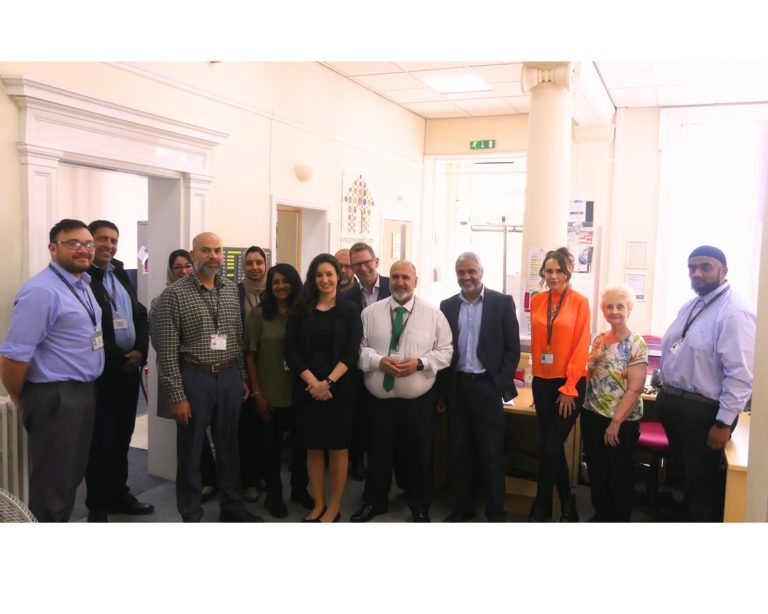
Chartered accounting and business advisory firm, Saffery, has revealed what Labour’s first Budget for 14 years, which was packed with announcements spanning tax, spending and pay, as well as 1p off pints, means for Yorkshire businesses and their owners.
Justine Stalker, tax partner in Saffery’s Yorkshire office, said: “Given the widespread speculation around tax increases in the Budget, small and medium sized business across Yorkshire will be pleased to have some certainty over tax measures to allow them to plan and invest.
“The headline rate of corporation tax will be unchanged at 25% until the end of the Parliament with full expensing relief, and the £1m Annual Investment Allowance (AIA) for 100% tax relief on eligible capital expenditure will be maintained. The merged R&D tax relief regime should continue to encourage investment by innovative regional companies.
“Businesses across Yorkshire will see the cost of employing key staff increase from 6 April 2025, due to a reduction in the per employee threshold at which Employer National Insurance is payable from £9,100 to £5,000 per year. This is in addition to an increase in the headline rate for Employer National Insurance from 13.8% to 15% and an increase in the National Living Wage by 6.7% to £12.21 per hour. The Chancellor hopes to offset the cost impact against small businesses by increasing the employment allowance from £5,000 to £10,000.
“For companies, the Government intends to make the corporation tax system as effective and competitive as possible with ambitions for modernisation and reducing fraud, as set out in the Corporation Tax roadmap.
“There are clearly areas the Government wishes to change, and we will have the opportunity to feed into various consultations, such as on the effectiveness of contaminated land relief, the widening of the use of advance clearances for R&D tax credit relief and reforms required to transfer pricing. No doubt, as new measures unfold, there will be both winners and losers and from the information provided today, there is a general sense that the administrative burden is likely to increase.”
Chris Luckett deals with private client tax issues in Saffery’s Yorkshire office. He said: “The Chancellor will be hoping that despite increasing the lower rate of capital gains tax (CGT) from 10% to 18%, the higher rate from 20% to 24% and gradually increasing CGT rates for Business Asset Disposal Relief (BADR) from 10% to 14% from 6 April 2025, to 18% from 6 April 2026, this will not deter business owners from taking on external investment to fuel their growth ambitions.
“Certainly, the alignment of CGT rates with income tax, which had been predicted by some, has not materialised. The Leeds and Yorkshire start-up ecosystem will be pleased to have assurances that the tax benefits offered to investors in early-stage companies through venture capital schemes, such as the Enterprise Investment Scheme (EIS), has been extended to 2035.
“However, many private and family-owned businesses across Yorkshire, including those in the rural economy, which are reliant on family succession may be concerned over the curtailing of Inheritance Tax reliefs for Agricultural and business property. Whilst these measures do not take effect until 6 April 2026, business owners may wish to consider accelerating discussions, reviewing their position and taking advice in this limited window, if they are looking to protect value and pass their family business to the next generation tax efficiently.”
Saffery has had a base in Harrogate town centre since 1992 and the firm recently announced that its 84-strong Yorkshire team will be expanding into Leeds, after signing a lease on new offices at Wellington Place.
Saffery was established in 1855 making it one of the UK’s longest-standing independent accounting firms. Today it employs more than 1,200 people across nine UK offices.